About ProQA Plus
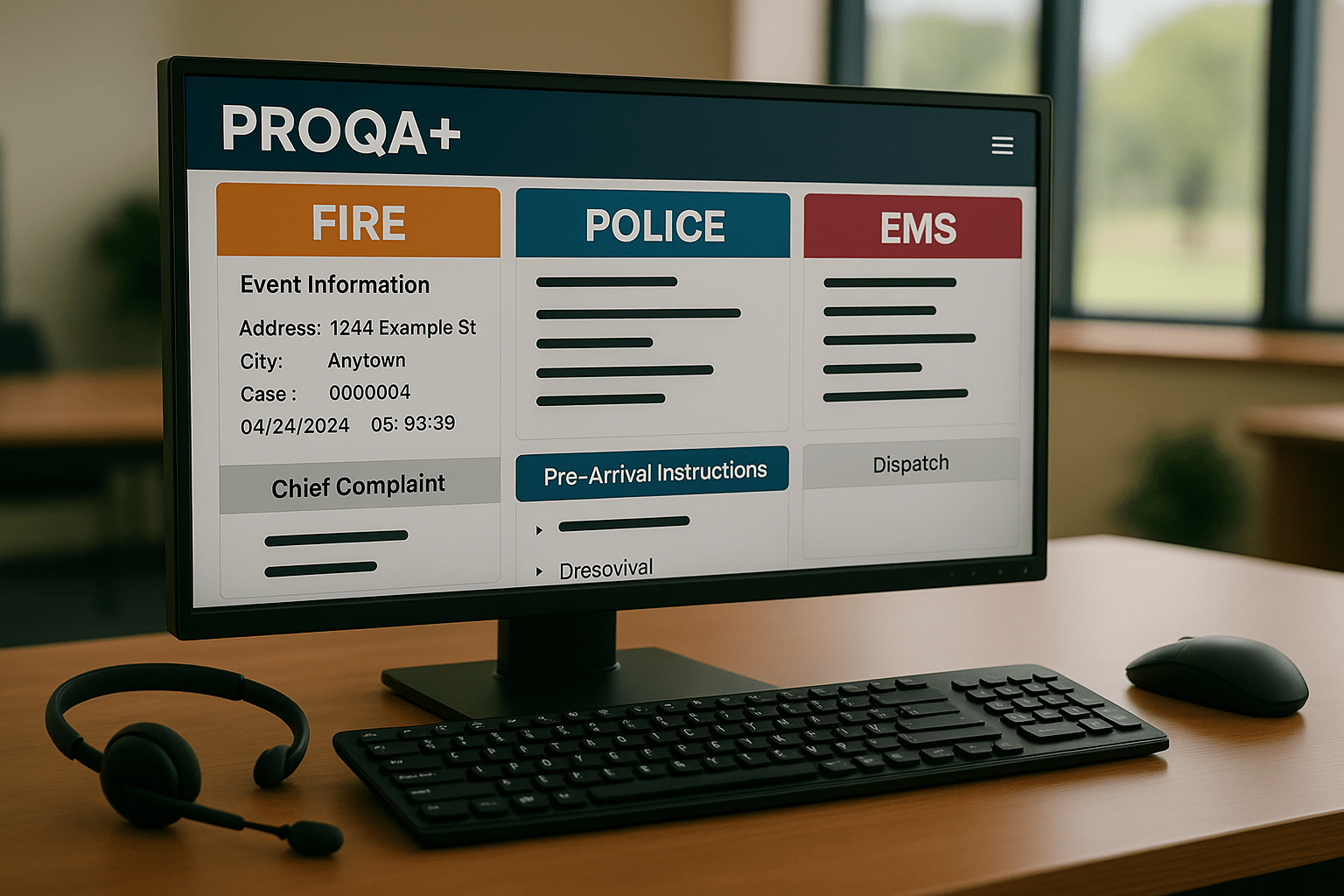
ProQA Plus is a comprehensive emergency dispatch system designed to streamline response protocols and improve outcomes in critical situations.
Emergency Services
ProQA Plus provides specialized protocols for all major emergency service categories
Police
Comprehensive protocols for law enforcement response, including:
- •Criminal incidents and public safety threats
- •Traffic incidents and vehicle accidents
- •Domestic disturbances and welfare checks
- •Missing persons and AMBER alerts
Fire
Detailed protocols for fire and hazardous materials response, including:
- •Structure, vehicle, and wildland fires
- •Hazardous materials incidents and spills
- •Carbon monoxide and gas leaks
- •Technical rescue and confined space incidents
EMS
Life-saving protocols for medical emergencies, including:
- •Cardiac and respiratory emergencies
- •Trauma and injury management
- •Stroke and neurological emergencies
- •Childbirth and pediatric emergencies
Response Levels
ProQA Plus uses standardized response levels to ensure appropriate resource allocation
Omega (Ω)
Lowest priority response. Typically handled by telephone advice or referral to other services without dispatching emergency units.
Alpha (A)
Low priority response. Basic life support (BLS) response, typically without lights and sirens. Non-emergency transport.
Bravo (B)
Medium-low priority. BLS response with possible ALS (Advanced Life Support) assessment. May use lights and sirens depending on circumstances.
Charlie (C)
Medium-high priority. ALS response with lights and sirens. Used for potentially life-threatening conditions requiring advanced care.
Delta (D)
High priority. Full ALS response with lights and sirens. Used for serious, life-threatening emergencies requiring immediate intervention.
Echo (E)
Highest priority. Maximum response with multiple units, often including specialized teams. Used for critical life-threatening situations.
Post-Dispatch Instructions (PDIs)
Critical guidance provided to callers while emergency responders are en route
What are PDIs?
Post-Dispatch Instructions are standardized, protocol-driven instructions provided to 911 callers after emergency services have been dispatched. They guide callers through critical first steps while waiting for responders to arrive, potentially saving lives and improving outcomes.
Benefits of PDIs
- •Provide immediate life-saving instructions before responders arrive
- •Reduce panic and help callers remain focused during emergencies
- •Standardize care instructions across all emergency calls
- •Improve survival rates for critical emergencies like cardiac arrest
Common PDI Examples
Medical Emergencies
"Place the patient on their back on a hard surface. Place the heel of your hand on the center of their chest and push hard and fast at a rate of 100-120 compressions per minute."
Police Incidents
"Stay on the line with me. Lock your doors and windows if safe to do so. Move to an interior room away from doors and windows. Do not confront the intruder."
Fire Emergencies
"Evacuate the building immediately. Do not stop to gather possessions. Stay low to avoid smoke. Close doors behind you if possible. Meet responders at the designated meeting point."
PDIs are tailored to the specific emergency and updated based on the latest medical and safety research.